
Governing by Disconnection: Uganda’s internet shut down in perspective
- Lex Amica

- 58 minutes ago
- 6 min read
The Editors
On 13th January 2026, the Uganda Communications Commission (UCC) imposed a nationwide internet shutdown in the lead-up to Uganda’s general elections that were held on 15th January 2026. The decision was reportedly taken on the recommendation of the Inter-Security Agencies, in a move to ostensibly to curb misinformation and disinformation, prevent electoral fraud, and address perceived threats to national security during the electoral period. This shutdown commenced at 6:00 p.m. of the same day and lasted for approximately five days, with partial restoration on 18th January. Notably, the restoration excluded access to social media platforms. This was not a very alien development.
Uganda has experienced similar internet shutdowns during election periods in both 2016 and 2021. What is particularly striking about the 2026 shutdown, however, is that prior to the elections, both the Government and the UCC had through official social media platforms and news conferences publicly denied having planned any internet shutdown. This in and of itself raised serious concerns regarding transparency, accountability, and good faith in the regulation of digital communications within the Ugandan context. It is important to understand that we live in an era that is increasingly characterised by digitalisation. The use of the internet and digital platforms is almost ubiquitous in all arenas of human life. In this regard, the internet plays a central role in voter education, election monitoring, information dissemination, and results transmission.
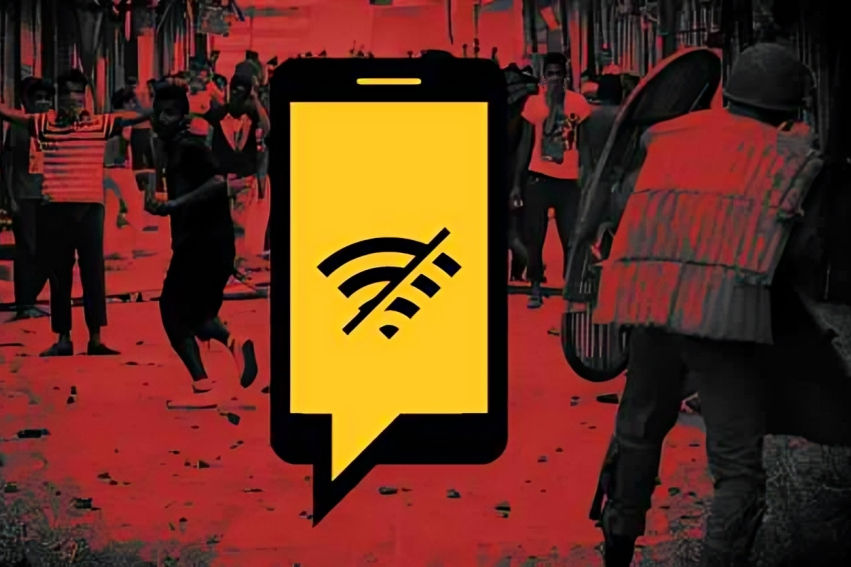
It’s important to note that the use of technology in electoral processes has the potential to enhance efficiency, transparency, and public trust. The decision by UCC to impose a nationwide internet shutdown during an electoral period therefore had far-reaching implications not only for the conduct of the elections but also for the broader enjoyment of fundamental rights and freedoms in Uganda, both during the electoral period and subsequently. This article illustrates how this internet shutdown undermined the integrity of free and fair elections, failed to meet constitutional standards governing the limitation of rights, and amounted to clear violations of internationally and nationally recognised human rights.
Firstly, regular, free and fair general elections are a cornerstone of modern democratic governance. Their credibility depends on the effective and transparent conduct of every stage of the electoral process. Modern electoral systems increasingly rely on digital technologies in the conduct of electoral activities. This includes voter registration, database management, election observation, and the transmission of results. All over the world and in some African states, biometric voter registration and electronic voting systems, all of which depend heavily on stable internet access to function effectively have been adopted. In the recently concluded elections, biometric voter verification kits in majority of the areas failed to work and though not yet sufficiently proved, it has been said the shutdown of the internet had an impact on the functionality of these biometric voter verification kits.
Secondly, access to information is an essential element of democratic elections. Voters must be able to receive timely, accurate, and diverse information in order to make informed choices. On the other hand, civil society organisations, election observers, and the media require unrestricted communication channels to monitor electoral processes and hold authorities accountable. This contributes to the elements of free and transparent elections. Internet shutdowns severely disrupt this ecosystem because by cutting off access to online platforms, the state suppresses the free flow of information, constrains civic engagement, and impairs the ability of independent actors to scrutinise the conduct of different actors in the electoral process.
Social media and other digital platforms serve as critical spaces for political communication. Government institutions use these platforms to issue public updates, whereas individuals, activists, journalists, election observers, and political actors rely on them to share information, engage in political debate, mobilise supporters, and report electoral developments in real time. Unlike traditional one-way communication channels such as radio and television, digital platforms facilitate interaction, feedback, and public participation in governance. Information accessed through these platforms directly supports the right of access to information as guaranteed under Article 41 of the Constitution of Uganda, Article 19 of the International Covenant on Civil and Political Rights (ICCPR) and Article 9 of the African Charter on Human and Peoples’ Rights.
When the internet was shut down, these rights were significantly curtailed. Citizens were deprived of timely and reliable information necessary to meaningfully participate in the electoral process and to make informed choices regarding political candidates. The shutdown also cast doubt on the transparency and credibility of the elections, particularly given the fact that the election was happening against the backdrop of reported incidents of election-related violence in the period preceding polling day. Election observers and monitors depend heavily on internet access to document irregularities, share real-time data, and ensure public oversight. The disruption of the internet therefore substantially weakened independent monitoring efforts and undermined confidence in the electoral process.
Furthermore, the shutdown of the internet also had a direct and severe impact on the right to freedom of expression. The restriction of the ability of individuals to seek, receive, and impart information and ideas limited meaningful participation in democratic arena. During elections, this impact is especially pronounced as voters, political parties, journalists, and civil society actors are constrained in their ability to communicate, debate public issues, and engage in political advocacy. International human rights law is clear on the scope of this right. Article 9 of the African Charter, guarantee freedom of expression, including the freedom to seek, receive, and impart information and ideas of all kinds, regardless of frontiers and through any media of one’s choice. Whereas the ICCPR and other human rights instruments recognise that the freedom of expression may be subject to certain limitations such as for the protection of national security or public order, such restrictions must be clearly provided by law and must be necessary and proportionate to a legitimate aim. They should never be imposed arbitrarily or in a manner that negates the essence of the right.

Therefore, although access to the internet and the rights derived therefrom may be subject to lawful limitations, any restriction must satisfy the established tests of legality, legitimate aim, and necessity and proportionality set out by the Supreme Court in Charles Onyango Obbo & Another v Attorney General (Constitutional Appeal No. 2 of 2002). The nationwide shutdown imposed during the 2026 elections fails this test, particularly on the requirements of necessity and proportionality. The measure was sweeping in scope and indiscriminate in effect, impacting millions of users regardless of any demonstrated risk to public order or national security. Here, it is important to note that there are existing laws that could have been used to deter and prosecute those who wished or attempted to use the internet for any of the wrongs that the UCC set out to curb. The computer misuse Act contains many of these offences as well as the Anti-terrorism Act (as amended) among others.
Furthermore, the shutdown had grave socio-economic consequences. A significant number of livelihoods particularly in urban areas depend on internet-based services. Digital platforms such as SafeBoda and Glovo rely entirely on internet connectivity to operate. The disruption of internet services therefore translated into lost income, interrupted services, and broader economic harm to individuals and businesses in and out of the country. This illustrates the grave and disproportionate nature of the shutdown and its incompatibility with constitutional and international human rights standards.
Equally, blanket internet shutdowns facilitate human rights abuses. This is mainly because internet shutdowns have the serious potential to severely limit real-time reporting of human rights abuses and citizen journalism on social media platforms. Even after partial restoration of general internet access following the nationwide blackout, major social media applications in Uganda remain blocked by authorities. This ongoing restriction underscores the critical role social media plays in enabling grassroots journalism and public accountability in the digital era. As such, in the absence of open connectivity, gross human rights violations such as arbitrary arrests, excessive force against protesters, or other abuses can occur with far less immediate visibility, documentation, or international scrutiny, allowing them to go largely unreported and unchallenged in real time and in the future due to the unavailability of evidence of these abuses.
The internet shutdowns present itself as tool of Techno-fascism in the world at large and now mores specifically in Uganda. Techno-fascism is an emerging, contentious term used to describe the fusion of authoritarian political power with advanced, corporate-controlled technology. The power of the internet is almost incomprehensible; this same power that turns people into millionaire’s and billionaires overnight, also has the potential to break down authoritarian regimes through citizen awareness, activism and civic engagement especially during crucial transitional moments like election periods. It is for this reason that measures to curb Starlink, an innovative satellite internet service that uses low earth satellites hence doing away with tradition Internet Service Providers were employed, first through custom checks by the Uganda Revenue Authority and subject to release upon authorisation by the Chief of Defence Forces, Gen. Muhoozi Kainerugaba, the incumbent President’s son. This was later followed up by a directive from the Uganda Communications Commission to Starlink, requesting it to suspend its internet service operations over Uganda. These actions demonstrated clear political interference and foreshadowed the imminent nationwide internet shut down that followed a few days later.
In a nutshell, the 2026 internet shutdown in Uganda represented a serious regression for democratic governance and human rights protection in Uganda. It weakened electoral transparency, restricted fundamental freedoms on top of imposing unjustifiable social and economic costs, all without meeting the legal thresholds required for limiting constitutionally protected rights.


Comments